Monday, February 18, 2013

The world's top documentary filmmakers give advice in these short but wise sound-bites:

http://films.nfb.ca/capturing-reality/

Sunday, February 17, 2013


Documentary makers know that there’s more to the art then just letting the camera roll. There are strategies to employ, and in choosing the right ones, there are mistakes to be made. Don’t get stuck in one (or more!) of the 5 mistakes documentary makers make:

1) Not asking a question or choosing a theme

I think the biggest mistake people make is going ahead with making a documentary just on the basis that they have found a subject that interests them. This can sometimes result in a great film, but rarely. A documentary has to ask a question or have a big theme. By “big theme” I don’t mean it’s got to be worthy – another documentary no-no that I’ll get to later—I just mean its got to have a driving force of some sort. Before filming, ask yourself, what question am I asking and how does this film express my worldview?

  2) Choosing a ‘worthy’ subject

People who decide to go off and make a documentary on the basis that the subject is ‘worthy’ get themselves into a tricky spot. You might find that a righteous topic is so widely researched that there aren’t many new upheavals to make. You also might find that the footage doesn’t create an entertaining feature. Interesting, worthy documentaries might work for a TV insert or news piece but are unlikely to make a great film.

3) Using poor technique to recreate events

When watching TV documentaries, one of my biggest Room 101s is when directors try to portray a past event by going all low-resolution and throwing the camera around or wheeling in bad actors and making them go out of focus. There’s more to drama reconstruction than the blurry, home movie look.

For great drama reconstruction watch Man On Wire (which also benefits from some extraordinary archive film footage).

4) Using bad music

Raindance Film Traing Courses Work

The soundtrack of your documentary can really make or break its mood. Don’t trust the guy that you just met who offers to write an entire score for your film. You, the director, should have your own strong ideas of how the music will function in the film. From there, it’s your responsibility to choose the right person for the job, someone who understands your ideas and has the knowledge and talent to make those ideas come to life.

5) Filming without a vision

At the end of a day a great documentary has to have a strong vision, and that vision informs every creative and editorial step along the way. Like mentioned before, your music guy has to share your vision; so does everyone else in the process. Only when everyone is on the same page can the documentary achieve its intended goals.


http://www.raindance.org/5-simple-mistakes-documentary-filmmakers-make/

Friday, February 15, 2013

From British Council website:

http://film.britishcouncil.org/our-projects/this-month/short-stories


Always a significant part of our programme, our shorts activity has taken a giant leap forward this year and includes the launch of three new films designed to help you get your short seen.
We started the year off right here in London enjoying the London Short Film Festival in the company of a delegation of international curators who joined us from France, Italy, Poland, Germany, Netherlands and Serbia, sponsored by British Council offices in their respective countries. The group had exclusive access to UK work and enjoyed a programme of introductions to key UK film partners, starting with  the British Council-sponsored LSFF opening night reception. The Festival came to a close with the Awards ceremony at which Nicholas Abrahams' Ekki Mukk carried off the British Council Best UK Short Award - and you can watch right here:
Since we re-launched our Shorts Support Scheme last year, in partnership with the BFI, we’ve made 55 individual Travel Grants to filmmakers to help them present their work at major film festivals. Eva Weber's Reindeer, Fyzal Boulifa's The Curse and actor -turned-director Romola Garai's Scrubber were among those heading for Sundance with our help (and by way of celebration we were delighted to be able to stage another Sundance Send -off in partnership with our friends at BAFTA, where selected guests from the UK industry drank a toast to the UK filmmakers selected for the festival the night before they left). You can read about all of the UK films in Sundance by clicking here.
Early February sees the re-launch of the UK Film presence at Clermont Ferrand, the world’s most prestigious short film festival after several year’s absence. In a new partnership with BFI we’ll be leading a group of 15 key film organisations including Creative England and Encounters in a market stand representing the best of UK short film.
Finally - we’re delighted to launch Shortsighted right here! Three short films we have made in partnership with the team at BAFTA Guru, as a result of a joint conference of the same name staged by British Council, BAFTA and Shooting People last year. Designed to help filmmakers once they have completed a short film to navigate the murky world of exhibition and distribution and actually get that film seen, these three Shortsighted films explore the pros and cons of Film Festivals, unpick traditional means of distribution and question the latest thinking around on-line distribution. A range of experts from the worlds of distribution, exhibition and film promotion, together with fellow filmmakers who have trod the path before you, discuss the issues - and you can see the results right here:
Shortsighted: Festivals
Shortsighted: Sales Agents
Shortsighted: Online

Monday, February 11, 2013

Ken Burns talks about story in this video in a way that really gives you an insight into what you need to think about selecting stories for documentaries...


Friday, February 08, 2013

Wednesday, January 09, 2013


HOW TO TELL THE PRESS ABOUT YOUR FILM AND WIN…


FROM: HTTP://BRETTGERRY.CO.UK/?P=1040

Two truths that filmmakers completely ignore: firstly, films are made to be seen, and secondly, no-one is going to ask to see your film unless you tell them about it. You’re either making or have made a film, but you need people to see it.  Press and press-related publicity can do wonders for bringing attention to your film, but who are the press and how should you approach them?
Today, the definition of ‘press’ is thankfully blurred. Whereas once we had institutionalised, homogenised and fairly closeted newspapers and audio-visual media, we now have a huge selection of bloggers, websites, webseries, podcasts, free magazines and social media commentators all starving for content specifically tailored to them and their audience. You need these people to help you get your film noticed, not just when it is released – and here we need to draw the distinction between how to talk to the press and how to get your film reviewed – but also throughout any pre-release campaign. Fortunately, the press need you to provide them with a story. If you know your film’s target audience (and you should!), you can provide the relevant press outlets with something that interests their readership/viewership and promotes your film.
Let’s start with another truth: all publicity is good publicity, but nobody likes spam. You should NEVER send an email or letter or tweet to a press organisation begging for promotion. I’ve seen too many of these in my time from filmmakers and it needs to stop. Begging doesn’t work, it doesn’t build a relationship but destroys a potential one. Relationships and knowledge are key here. Research a press outlet before contacting them, discover what marketable elements of your film appeal to their content and subscribers. Find out if you know anyone on the staff – are they on Twitter, do you know a mutual acquaintance professionally or personally – who you can contact directly. You need to tailor an email just for them.
Here are three things you must do in your email:
1) Always offer a reward
I like getting something for free. Everyone does. I like it even better when someone gives me something that I know is going to benefit me professionally. So think of your email as offering an exchange: you give the press outlet something, they give you promotion for your film. Some of them just want a story (see below) whilst others will want a little extra. Tickets to your premier or a DVD are not good enough rewards for printing a story about you film, and are patronising at best – the outlet wants copy, and they want good copy. Can you give them an insight into their given subject? The opportunity for their readership or community to grow through debate? The promise of further content? Perhaps even cross-promotion? Here’s where you need to identify the ‘story’.
2) What are you giving them?
Often I receive communications that tell me about a certain project in a flat and uninspired manner. For a journalist, the statement ‘I’ve made a film and I’d like you to look at it’ isn’t a story. It’s garbage. You need to go back to your hooks and align them with what you’ve learnt about that press outlet. What do their subscribers want to read/hear/see? Can you give them that with any aspect of your film? Think about all stages of production, the unique content of your film, the people involved, the source material, the distribution method. Ask yourself, why would this outlet be interested in my product? If you can back your answer up withbona fide evidence (links, images, anecdotes), then you’ve got the right outlet.
3) Structure is everything
It would be too easy for me to offer you a copy-and-paste template of a good press-orientated email. It would also be very irresponsible. In this series of articles, I want you to understand that your independent film’s future lies in the work that your willing to put into it. Any email you send needs to be individually crafted for each press outlet. Obviously, you can use the same email for similar websites or magazines, but overall you need to structure any correspondence uniquely around the offer of the reward. Include some history of yourself and the production that is only relevant to the reward, and state the reward clearly and succinctly twice within the email – at least once, you should pitch it to them as a question (‘Are you or your readership of marine biologists interested in a documentary film about giant squid?’) to sell the lie that you don’t know your rewarding them.
(I will give you this for free: always sign off by suggesting you will be contacting them ‘later in the week to answer any questions’. It puts the fear of God into most journalists…)
Finally, most of you reading this will be shocked to realise that by ‘press’ I am not referring to film reviewers or film bloggers. Press are people who might be interested in passing on a certain aspect of your film, as you should be aware by now. They are not interested in your movie, only an element of it. It is your job to identify every element that you can exploit – and I talk about this at length in my article on identifying your target audience – and then to identify the press outlets (online, in print, etc) that will be interested. Throughout the entire stage of market research, you should be building up countless links and bookmarks of such outlets who you can approach.
But when is the earliest you can start contacting them? When you have a good story that will interest them. Contact the right people at the right time, and maintain contact when newer stories arrive. Even if they ignore you. (I’m of the opinion that you should only ever stop contacting a press outlet when they tell you to!). Remember, a lot of good publicity comes from relationships and knowledge. If you can offer a solid hook that appeals to an outlet’s market, you can build a relationship with that outlet throughout your filmmaking process and beyond into distribution. But you need to be consistently personal in your correspondence with them, concise in what you are offering the outlet and why they should run this story, and confident in the face of non-communication.

Thursday, December 20, 2012

The Middle Men - now on MIND REEL

The award-winning feature length documentary that I cut called "The Middle Men" directed by Meghan Horvath has just been added to MIND REEL - so you can now watch it online!

Set against the social stereotype of the middle-aged man running on empty who trades everything in for a second shot at life before it’s too late, "The Middle Men" reveals the emotional and physical worlds of eight men in their 40s and 50s living and working in England.

Click here to watch it:


Wednesday, November 07, 2012

Eastern Edge Film BUBBLING UNDER by Matt Compton is taking part in this month's Film of the Month competition on Shooting People. You can watch it here:


Unemployed and faced with crippling debt, Will is desperate to find work to support his seriously ill girlfriend. As his desperation to find employment grows Will finds his whole perception of reality cracking and shifting. Tormented by strange and gruesome visions Will must confront his own conscience.

The film won the Limelight Film and Video Awards Best Horror in 2011.

Please give it some stars!! (Only Shooting People members can vote).


Monday, October 15, 2012

Well done WALK TALL (again) for picking up another award!!

This time at Sarnia Shorts:


Sarnia Shorts 2012: and the winners are…!

Best Youth Entry: Revenge – Ellie Lawlor & Mike Davis
Best Student Entry: New With Tags – Matthew Nesbeth
Best Use of Sound: New With Tags – Matthew Nesbeth
Best Mini: Make Your Money Grow – Josh Fletcher
Best Script: 8 Ball – Mark Brennan, Carl Austin & Geoff Harmer – Pork Chop Pictures
Best Direction: Clown vs Society – Brindusa Ioana Nastasa
Best Use of Camera: Alaunda Ruiz de Azua – Dicen (They Say)
Best Use of Editing: Room – Fernando Franco
Best Animation: Eso Te Pasa Por Barroco – Pable Serrano Rosillo
Best Non-Fiction: Walk Tall – Kate Sullivan
Best Fiction: Matar A Un Nino – Cesar & Jose Esteban Alenda
Best International Entry: Matar A Un Nino – Cesar & Jose Esteban Alenda
Best UK Entry: Buon Giorno Sayonara – Karen Hope
Best Guernsey Entrant: to be announced at the Winner’s Show on Sunday 21st October
Best Film 2012: to be announced at the Winner’s Show on Sunday 21st October

Wednesday, October 10, 2012

EASTERN EDGE FILM FUND FILMS The Holiday and Jimmy Will Play are both competing in October's "Shooting People" Film of the Month competition. Only 10 days left to vote in the FIRST ROUND. Top 5 films go through to the FINAL ROUND.

Eastern Edge films have been doing rather well in the last few months - with STILL LIFE becoming a finalist in August, and WALK TALL being a finalist in SEPTEMBER. Oscar-winning film director, Danny Boyle is currently reviewing the top 3 films and will choose an overall winner. Finger's crossed for WALK TALL!

We would like to make it three months in a row for Eastern Edge films, so please do watch and vote for  JIMMY WILL PLAY and THE HOLIDAY now (only paid-up Shooting People members can vote).

WATCH AND VOTE HERE:

https://shootingpeople.org/filmofthemonth/leaderboard


JIMMY WILL PLAY (dir. Mawaan Rizwan)
Footie-fanatic Jimmy really wants a pair of pricey football boots. But can he persuade his mum to buy them? Director: Mawaan Rizwan Producer: Selina Osei Funded by the Eastern Edge Film Fund


THE HOLIDAY (dir. Ida Akesson)
Banter around the burger van is always animated - especially with Ken griping on about his nagging wife and kids. But not all is as it seems...

TWO GREAT FUNNY SHORT FILMS!!


WATCH AND VOTE HERE:

https://shootingpeople.org/filmofthemonth/leaderboard


Monday, October 01, 2012

Interesting podcast about pitching projects:


How do you get the most from your pitching opportunities? In this Podcast, the lovely Signe and Bob from the Great American Pitchfest share their massive pitching experience with us all – we can also reveal that while they are over here promoting their new feature film, Below Zero, starring Edward Furlong, they will also be heading up and running the all new pitching sessions at the festival – announcing the Great British Pitchfest at the The London Screenwriters’’ Festival! Fanfare!
What does this mean?
  • You get to choose from 11 separate pitching sessions, each 90 minutes long
  • You get to choose who you pitch to in the room
  • You get more pitches than at previous festivals
  • We are flying in top executives, agents and producers from Hollywood
If you want to pitch at the festival, you will need to sign up pretty soon as tickets are selling faster than ever and we do expect to sell out this year. Get £30 off with the code LSFNEWS.

Listen to the Podcast below…

Download the MP3 file here for your iPod

Wednesday, September 26, 2012

From The Smalls Film Festival 2012 - session on Crowd Funding


he Smalls Film Festival 2012 got off to a roaring start with two packed Monday sessions at the legendary creative arts venue The Hospital Club in Covent Garden, London.

Create Crowdfunding Campaigns and Generate Exposure

Crowdfunding Master ClassIndiegogo
So, you know you want to launch and run a crowdfunding campaign to finance your next film project – but how do you draw attention to your ideas and succeed in your efforts to drum up those dollars?
At The Smalls Film Festival 2012, Producer Sylvia Wroblewska spoke to Adam Chapnick from Indiegogo (via Skype, all the way from LA!) and Katharine Round, Producer/ Director behind the successfully crowdfunded documentary The Spirit Level about how to launch, grow and maintain a healthy, two-way relationship with your contributor audience.
Watch the full session here on The Smalls soon. Until then, below are a few quick bites for takeaway!
Inspirational & educational links
Nuggets of wisdom
  • Crowdfunding is shared enthusiasm, not static collection
  • Crowdfunding is about building an audience and a community around your work
  • We are all artists in some way or another, invite people into your creative process and engage them according to their passion for your work
  • What is your biggest asset? What or who will sell your idea & be the biggest draw for people to engage? What is your greatest news hook?
  • Map out and build up activities our before you go live, so that you are ready to raise money on day 1. Line up news, press releases, video updates – be prepared!
  • Identify your community – organizations, individuals, social media, and other interest groups, and make sure you have a simple ask when you reach out and prepare them for your campaign going live
  • Ask for support, don’t beg for money
  • Reach out and engage, don’t pester
  • Your video is really important! Keep it short and complete, and include your ask
  • Communication is not a one-shot deal! Build community – thank people, ask for advice as your project evolves, and provide updates to your following often (every 5 days doubles expected funding on Indiegogo)
  • Producer credits count, as do $25 perks (on Indiegogo these tend to raise 35% more than those without)
  • Introduce your team to your audience, the power of teamwork is pretty incredible
  • Complement your campaign page with links to your own website, your Facebook page or Twitter feed, or your profile or film pages on The Smalls – it builds credibility and engagement
  • Remember that crowdfunding is NOT just about money, but about building an audience who can also support you throughout the journey of your current project and future ones!
PERK: To get your hands on Adam’s brilliant crowdfunding presentation, emailinfo@thesmalls.com or simply click here to download a copy!
-----

Documentary Filmmaking: Live and Kicking

Alive and Kicking
Too many festival sessions bemoan the death of the traditional documentary, right? Right! We wanted to open up a dialogue with some of the industry’s leading creators, curators, and decision makers in documentary filmmaking, to run a health check and see what is really going on.
At The Smalls Film Festival 2012 Jane Mote, former MD of Current TV UK sat down with Hussain Currimbhoy from Sheffield Doc/Fest, Derek Thorne from One World Media and Lina Prestwood from C4 for a discussion designed to advise documentary creators on how to get commissioned, how to navigate the festival circuit, and how to get noticed – regardless of platform. 
The full session video will shortly be available here on The Smalls. Below we air a selection of highlights for now!
Inspirational & Educational links
Nuggets of wisdom
  • Documentary commissioners today look to invest in the individual, not the film – they are often looking for great, confident directors to attach to new series or other future projects
  • You don’t have to have come through a “traditional route” to get picked up by a channel, but you have to love TV if you submit your film to C4 (or any other network)
  • Always showcase your passion and your own voice – as a short filmmaker you are totally free – dare to show who you are
  • Documentary filmmaking today is about telling stories
  • Be bold, innovative, surprise your audience, and always try to go all the way
  • To do well on the festival circuit, research festivals before you submit to see how your film may resonate with that festival. Look at strands and previous winners, judges – do your homework before you choose where to submit
  • In documentaries, a cinematic eye is as important as a respectful, honest relationship between filmmaker and subject
  • Innovate when possible, never rehash
  • If you can, keep your short film short (15 minutes or less)
  • Access is key when making a documentary, to avoid it becoming purely observational
  • When you develop your documentary ideas it is easy to get stuck on issues that feel important – but remember that people are not interested in issues, they are interested in STORIES (great characters are important)
  • Many doc filmmakers take the NGO route. If you do, remember that people still need real stories to connect to – the cause or the work of an organization is great, but when it comes to building an audience you need to tell a good story
  • Ad-funded docs can be great as many brands are simply looking to make films that reflect their brand values, and not to plug a product or service
  • There IS an audience for documentary short films – from broadcast to festivals
Do you have thoughts or questions on our first sessions? Feel free to emailinfo@thesmalls.com - we'd love to hear from you.
---
THANK YOU to all our panelists and contributors who made Day 1 such a wonderful success!
And, of course, a special thank you also to all the incredible sponsors of The Smalls Film Festival 2012:
From Shooting People blog - Film of the month


VOTING ENDS 30 SEPTEMBER - THIS MONTH'S JUDGE DANNY BOYLE!

TWO EASTERN EDGE FILM FUND SHORTS IN FILM OF THE MONTH!!

Moments – Ida Akesson
For me Moments was one of those projects that came together really quickly and kind of
just worked. I had shot some test footage in Autumn 2010 and then in 2011 the Eastern
Edge Film Fund kindly agreed to support me and get the film made.
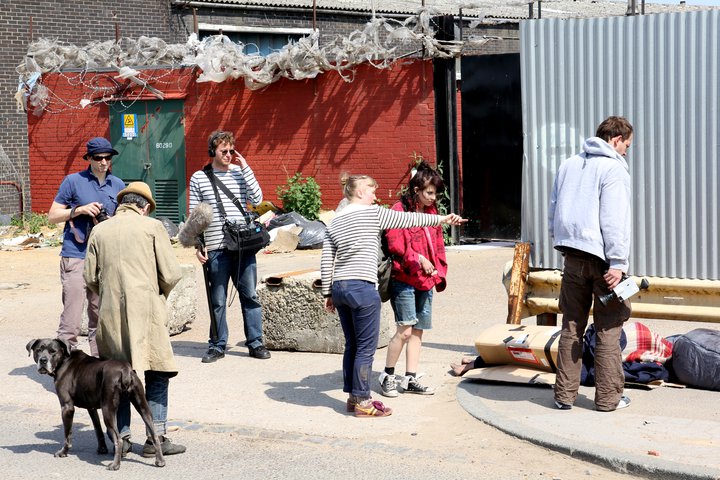
The film was shot around Barking in some industrial estates that was so wonderfully
scruffy and looked just as timeless and place-less as I wanted them to – I wanted it to look
a little bit like it could be any city any time, like a fairy tale almost.
I also wanted the street extras to come across as authentic as possible and had to go to
some trouble to find the right people. One guy I found whilst cycling around the industrial
estates on my bicycle looking at locations – he was living in a van outside the waste
transfer unit – my favorite location! I had to go back a few times to talk him into taking part
but in the end he came along and turned out to be a really nice guy.
Another member of the cast had recently lapsed his drug rehabilitation and called up
saying he wasn’t feeling well enough to take part on the day. We had to halt shooting -
whilst I again had to work my persuasive powers – and he also made it along, I think it was
the promise of a hot meal that did it.
Finally I was lucky enough to have a really great sound team – most notably a piece of
music by Andrew Horne, sound design by Rebecca Lloyd and a score by the legend that is
Simon Fisher Turner, to me the sound is what really makes the film.
To be picked as a Wild Card by Shooting People is awesome and I’m most grateful. I can’t
believe that the film has had nearly 2000 views! Big up Film of the Month!

Walk Tall
 – Kate Sullivan
 
Firstly I just wanted to say a quick thank you to everyone who helped us make the final round.‬
Both myself, the crew and George are very proud that you have enjoyed watching our film.
We’re all hoping for a fitting end to our year-long festival run, but come what may our journey with the film has been a truly wonderful one, and most importantly, one that has made an old man very happy!‬
Many, many thanks!
Kate
How the film came about:
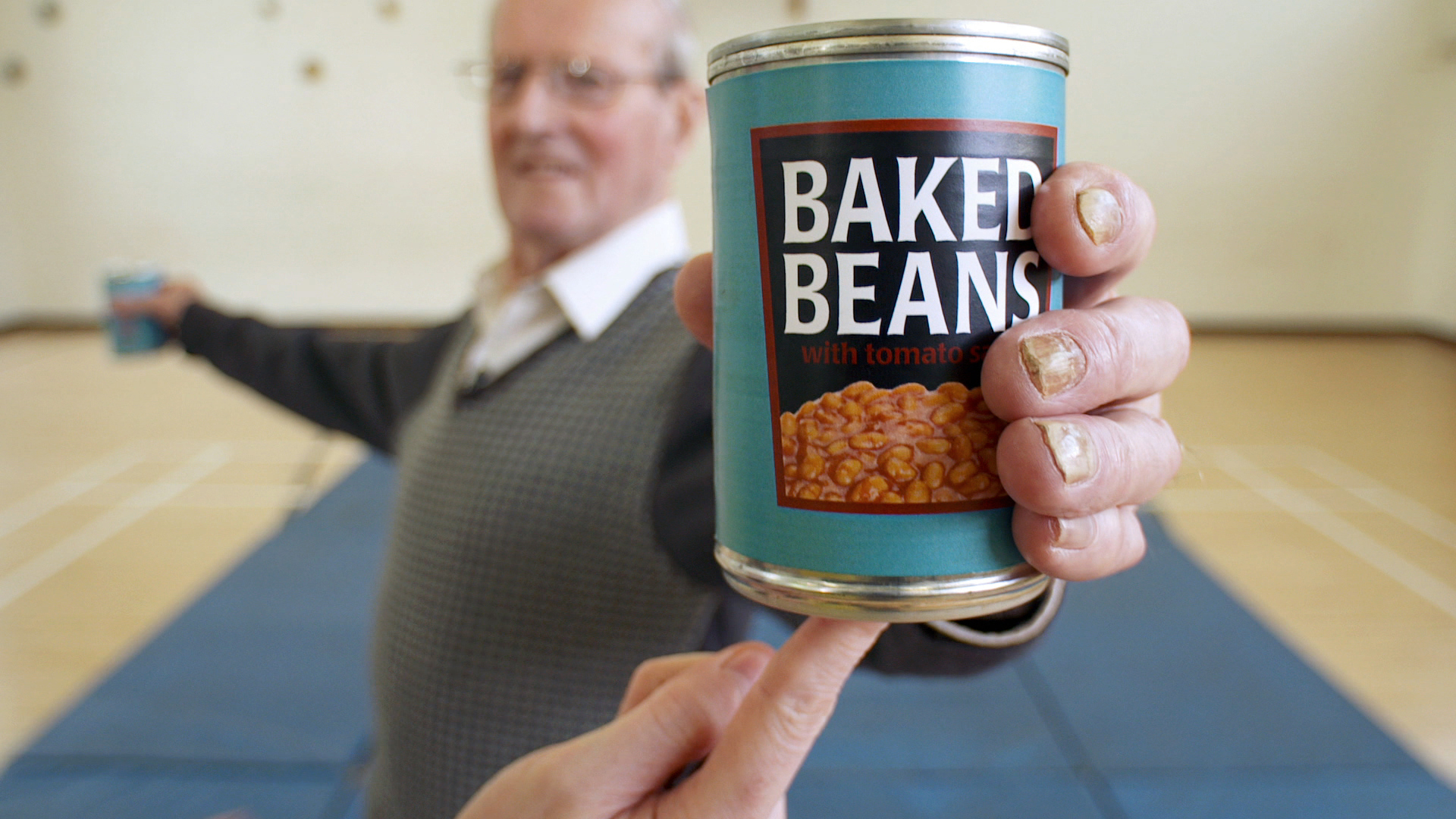
I first met George a couple of years ago. He was 89 and spinning on his back on a concrete floor in the middle of an entrance hall. I assumed then and there that this was going to be the best thing I see all day, until…he stood up and displayed the most amazing posture! He radiated this incredible, almost angelic sublime elegance! I stood transfixed, in awe – and envious. You see I have TERRIBLE posture – but luckily that day something helped me overcome a bit of self-consciousness and ask George (who unbeknown to me was an ex-Olympic gymnast and coach) for some advice.
Well to cut a long story short this kind, generous man offered to give me a few posture lessons. No gym equipment was used – or even a gym – just his front room at his home in Richmond, which I began to visit every couple of weeks of so. At times that I’d think, “isn’t this a all a bit odd?!” but I trusted my coach and anyway, his stories were making me want to keep returning. (I think that this must have been the longest time I’ve ever managed to keep up a gym-membership!)
Weeks turned into months and I began to take a long a small video-camera along with me to record these meetings and my bus-rides back home I’d watch the footage, sit (up a little bit straighter) and reflect on how it was the ideas and the man behind the exercises and not the exercises themselves that were starting to have an effect on my posture. When I heard about film London’s scheme to help first time film makers make a film I thought this would be an ideal opportunity to pitch an idea for a film about George because I really wanted to as many people as possible to hear his stories. I suppose I also wanted to in some way immortalise him – in return for the posture advice!
It also so happened that at this point in my life I was also starting to recognise a few recurring themes in my work and it was a thrill to realise that they were all present in what I was planning for Walk Tall. And finally I also wanted to as George would say “challenge myself” and attempt to dramatise a story and also to make an audience like a character, without being overly sentimental…
(George is a lovely bloke, but he’s no Werther’s Original granddad. He’s kind, generous and open-minded, but also is a highly determined, tenacious man who continues to test himself on a daily basis.)
And so anyway, thanks to George, I made my first film.
- And I’m chuffed to say that it’s had some really nice feedback  (from people including George!)
- And this has of course all left me walking a lot taller!


Friday, September 21, 2012

SHOOTING PEOPLE FILM OF THE MONTH - SEPTEMBER

Not one, but TWO films funded by the Eastern Edge Film Fund have got through the FINAL ROUND of the Shooting People Film of the Month competition.

Thank  you to those Shooting People members who voted in the FIRST ROUND. If you are a Shooting People member, please do vote for both these films in the FINAL ROUND, as ONLY VOTES IN THE FINAL ROUND COUNT!!

TOP 3 films of FINAL ROUND are then judged Danny Boyle by Oscar winning film director and Artistic Director of London 2012 Olympic Opening Ceremony.


Please click on the links below to view the films and vote:

"Walk Tall" by Kate Sullivan
"Moments" by Ida Akesson


Tuesday, September 18, 2012

Only a few days left to watch and vote for Kate Sullivan's "Walk Tall" in the Shooting People Film of the Month competition September.


Walk Tall from kate sullivan on Vimeo.

CLICK BELOW TO WATCH THE FILM AND VOTE:
https://shootingpeople.org/watch/111256/walk-tall

Wednesday, September 12, 2012

A nice common-sense article about casting


Some thoughts on audition technique ☛
Casting can make or kill your film. Get the wrong actors for the roles and your audience will be watching the lighting. Even if you get the right actors for each part, but they don’t gel with each other: the audience will start planning their weekend shop.  It’s vital to get it right.
Earlier in the summer I conducted mock-auditions for the Mountview Academy of Theatre Arts. I’ve run many casting sessions before, but I’d never seen 30 or more actors in a day. Still, that was the nature of the exercise, and the experience taught me as much as it taught them. Here are some ideas for both actors and directors drawn from that experience and my past forays into the field of casting.
Naomi Watts gives everyone a surprise at her audition in “Mulholland Drive”

THE ACTOR

There are some basic rules that should go without saying, but occasionally need repeating.
  1. Be on time, be early if you can. Turn up ahead of time and you might be seen early, perhaps because someone else has dropped out. If this happens, you might either get seen for longer, or at least get brownie points for helping the director and casting director, if they’re behind schedule. Turn up late and, unless your performance really knocks the ball out of the stadium, you’ve lost the part. Simple as that. Film and TV shoots run to tight schedules, TV in particular. For smaller roles they’re keener to know that the actor will show up on time, than they are to know that they’ll shine.
  2. Know the script. While it’s rarely required that you be word perfect, it’s important that you’ve had a chance to familiarise yourself with the scenes. A couple of students at Mountview tried to audition without even having read it through once. Pointless – I could tell nothing about their ability to play the part. It is however possible that you won’t get the script until you turn up; in this case allowances will of course be made.
  3. Be polite. Again: obvious. Remember that the director may well need to spend a lot of time with you on set:  give off a bad vibe you might just lose the part to another actor of equal talent but greater charm.
  4. Want the part. Usually not a problem, you’d think, but you’d be surprised. One of the most striking things I learnt from the Mountview students was how powerfully enthusiasm for the job (or lack of it) can communicate. There was one student who strode into the room armed with a warm handshake and unforced eye-contact. Everything about him conveyed an earnest enthusiasm for the project, keenness to work with me, and a deep belief that he was right for the part. The effect was overwhelming: he had me wanting to like his performance, and believing that he’d be a great guy to have on set. I’m going to remember what he did for the next time I go up for a job.
As for the performance itself, usually you’ll be given no direction when you first play the text. The trick here, I believe, is:go for it. If you have an extreme idea, try it out. Don’t force it, but be bold. The director may well have seen a dozen or more actors playing the  scene, and many of those performances may be quite samey. An actor giving the reading that’s markedly different will be a refreshing change. It’s even possible that your interpretation might spark new ideas in the director. They might start looking at the character in a different light: your light.
That being said, some directors, particularly writer / directors, have a fairly fixed idea of how they want the scene to be played; this is where the redirect is vital. The director will be looking for two things on the redirect: range and responsiveness. Too often the performance second time round is only fractionally different from the first take. Either the actor hasn’t listened, or they only have one performance to offer. Neither is good – the director wants to be able to work with you. Making your performance on the redirect significantly different from your performance first time round, shows that you can take direction and gives you an opening to impress with your range.
Above all, if you don’t get the part don’t see the session as having been a waste of time. There can be a hundred reasons why you weren’t cast that are outside your control. Impress the director or the casting director and, even if you don’t get this part, you’ll get on their radar. They might even start trying to think of other roles in which you might fit.

THE DIRECTOR

As chefs know, great cooking can’t happen without good quality ingredients. Similarly with casting actors – it’s the secret shortcut to impressive performances. Besides it takes even the most talented director a lot of time, effort and energy to squeeze a decent performance out of a weak actor. It’s so much easier to cast an actor who has natural talent and screen-craft, so that you can focus your attention on the subtle nuances.
Here are some simple suggestions that might help in the audition room:
  1. Give the actors time to prepare. Auditions should be about seeing an actor at their best, so give them as much time with the script beforehand as you can.
  2. Keep open space between the actor and yourself. A desk might be a power prop for business interviews but, while an audition has a similar objective to an interview, it is a very different beast. You’ll be doing work with the actor on the scenes, to see how you operate as a creative partnership. Desks suggest a far more disengaged dynamic.
  3. Make sure there’s more than one of you. If you have a casting director, have them in the room, failing that the producer or even just the person operating the camera. For a start, you’re going to need someone to read in the other part: it can be difficult to judge the performance if you’re reading yourself. It also adds to the sense that yours is a serious production. A lot of actors treat one-man-bands with a caution: physical evidence that at least one other person believes in the project can reassure them.
  4. Record it. Most people do these days; it‘s indispensible. I never cease to be amazed at how often the actor who appeared to be the best candidate when you were in the room, ends up not to be the right choice when you watch the tape back. A quick camera tip: many rooms used for auditions have harsh top-light and, combined with the use of low-end camcorders, it’s easy to end up with a recording on which you can’t see the actors’ eyes. Before you start, take a minute to work out where in the room is most favourably lit and keep the camera low, so that you’ll be seeing up into the actors’ eyes.
Mark Hamill and Harrison Ford trying out for “Star Wars”
Most auditions start with a brief chit-chat, traditionally where the director asks what work the actor has been doing recently. This information should be evident on their resume, so the content of the conversation is usually redundant. Other directors ask the actor about their impression of the script or of their character. This can be more useful, but often ends in gushing flattery from the actor. The brief chat can still be useful for the director, so that they can get a sense of the actor’s natural presence, when not in character. I have a trick for this borrowed partly from a technique taught by Simon Phillips, but it ceases to work if the actor knows what’s coming, so I’ll have to leave it to you to think of a good way to use the chat time… or you could take one of Simon’s courses and see what he suggests.
One of the most important factors in getting good auditions, in my opinion, happens before the actor enters the room: the selection of the scene, or scenes, that the actor is to play.  Too often, directors choose expositional scenes just because they’re dialogue-heavy. Actors are only as good as their material; give them a scene with no dramatic meat and most will struggle. The ideal scene would be a two-hander, possibly a three-hander, in which the the auditionee’s character goes through at least one dramatic turn – they should learn something new that changes their attitude to things. At the very least you want a scene that gives the actor a chance to show you a number of different strategies their character could take to achieve their objective.  This doesn’t even have to be a scene that they’ll play in the finished film, or even from that project at all, as long as the emotional energy and character-type are pretty close to the character for which you’re seeing them. It’s more important that the scene gives them material that will allow them to show their best work. As theatre director Blanche McIntire has observed “you want people coming out feeling like they’ve done a good job”.
There are a number of other processes that can be used in the audition – many directors set up improvisations, for example. These can be a useful way to discover out how adaptable is the actor. Of course if you’re going to be using improv as part of your creative process in the piece itself, it’s vital to discover that the actor has those skills. This goes for any specific ability you need the actor to have that can be demonstrated in the room – accents, singing, conjuring tricks – you want to see it in action.
Finally, remember that you can recall actors if you’re not sure. The most important time to think about a recall is where you’re casting characters in a relationship. It doesn’t have to be a romantic relationship; it could be brothers, mother and daughter, villain and henchman, but if that relationship is central to your story, you’re going to need to know that those two actors click in a way that works.
The audition process is where you establish your relationship with your actors. It they feel that they’ve been cast on looks alone or in a random fashion, they’ll respect you less. Embrace the audition process to the full and the actors will feel confident that they’re right for their part and have earned it. They will feel that you are serious about getting the best from them. Given that relaxed, confident actors usually perform better, you can see that well-conducted auditions can not only get you the best cast, they can encourage the cast to be at its best.
mmm
Copyright © Guy Ducker 2012